Gymnastics Phase
Kris Gregory • October 1, 2025
Gymnastics Phase
October 13th to November 9th, 2025
Goal:
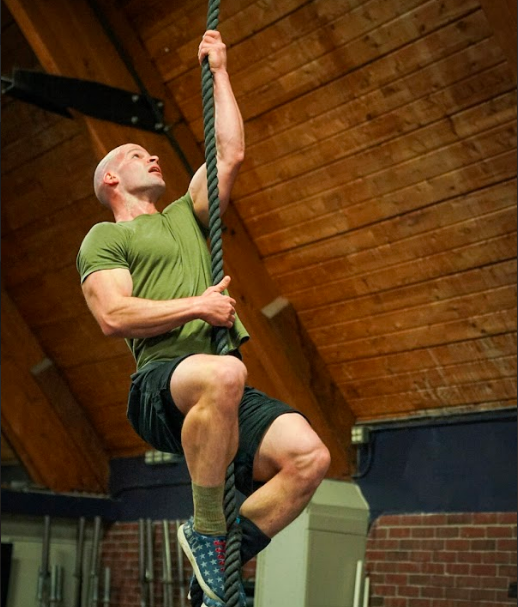
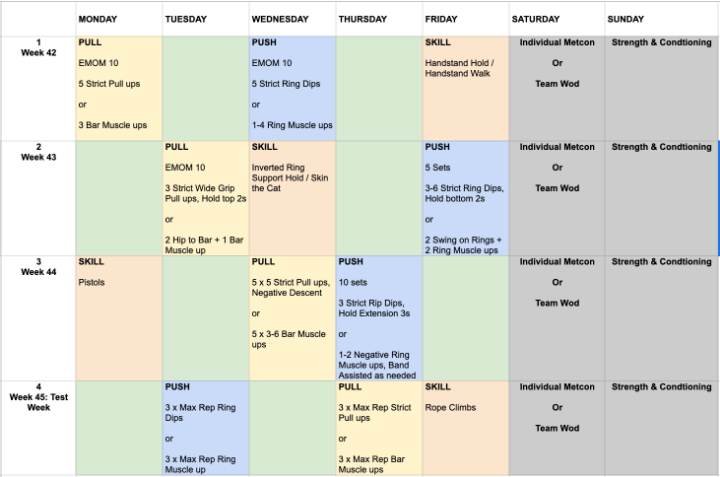
Build strength and technical proficiency in upper-body pulling and pressing gymnastics movements. Athletes will focus on pull-ups, bar muscle-ups, ring dips, and ring muscle-ups, while also gaining exposure to new skills and play-based gymnastics sessions.
Tests:
3 x Max Rep Strict Pull-ups / Bar Muscle ups
3 x Max Rep Strict Ring Dips / Ring Muscle-ups
There will be no baseline test scheduled in this cycle since we only have 4 weeks. The Test will happen in the last week of the cycle.
Context:
This 4-week cycle is designed to improve athletes’ capacity in foundational gymnastics pushing and pulling movements. The emphasis is on strict strength work (pull-ups and ring dips), dynamic transitions (bar and ring muscle-ups), and exposure to various gymnastics movements within the CrossFit methodology.
By the end of the cycle, athletes should see measurable improvements in strict pulling and pressing strength, with many moving closer to their first pull-up, ring dip, or muscle-up. Athletes will also improve confidence and body control through calisthenics-style accessories and skill exploration.
Advanced/Intermediate L2: Gymnastics Strength
Athletes in this category likely already have strict pull-ups or dips and are developing consistency in bar or ring muscle-ups. For the pulling sessions, these athletes can choose to perform the strict pulling option or the bar muscle up option.
Note: Athletes who rely heavily on kipping without strong strict foundations will need extra coaching here. Encourage them to buy into strict strength before pushing intensity or volume.
Beginner/Intermediate L1: Technical Focus
For athletes still developing strict pulling or pressing strength, scaling options will include banded variations, negatives, tempo work, and support holds. Movement quality is the most important factor in this cycle. By committing to the progressions and accessory work, these athletes can build the base they need for higher-level gymnastics skills.
Phase Details
Coaching
Since gymnastics is such a large spectrum and we can have classes that include athletes who have never done a pull up in their lives along with athletes who can string together multiple bar muscle ups, our goal is to get everyone to progress within the same session.
This can be tricky but you will see pulling sessions include pull ups & bar muscle ups in the same workout.
Sessions like this:
Pull up / Bar Muscle up
EMOM 10
5 Strict Band Assisted Pull up / 2 Low Bar Hip to Bar + Transition
This means athletes who need to focus on their strict pulling will perform the EMOM with the 5 strict band assisted pull ups and athletes who have bar muscle ups will focus on the technical complex of hip to bar + bar muscle ups. The warm up progressions will look like this:
Strict Band Assisted Pull up // Bar Muscle up
- 5 Scap Pull ups (Everyone)
- 3-5 Band Assisted Negatives // Low Bar Hip to Bar
- 2 x 1-3 Band Assisted Strict Pull ups // 2 Low Bar Hip to Bar + 1 Low Bar Transition
In this warm up, there would be a first explanation to advanced athletes what the hip to bar and low bar transition is and looks like then we would guide beginners on their progression.
Pulling Strength Progressions (Pull-ups / Bar Muscle-ups):
- Pulling strength sessions can be performed with assistance from bands.
- Bar Muscle up progressions will be a mix of technically focused sessions and endurance session.
Pressing Strength Progressions (Ring Dips / Ring Muscle-ups):
- Strict ring dip sessions can be performed with assistance from bands. .
- Muscle-up ring transition will focus on snap back pulling technique & endurance
Play Sessions
- The session focused on various gymnastics skills that will be performed as free play or practice.
Metcons:
Metcons will be varied and include most barbell movement. Special attention will be placed on overhead movements since gymnastics solicit the shoulders so much.
Accessories:
Accessories are centered on calisthenics and bodyweight strength: isometric holds, core progressions, scapular control, and unilateral bodyweight pressing/pulling variations.
These are directly supportive of the goal: helping athletes build the strength and control to achieve their first pull-ups, dips, or muscle-ups.
You will see plenty of opportunities to develop awareness and strength in your gymnastics, as well as test some of your gymnastics within metcons paired intensity and metabolic conditions that will challenge your gymnastic endurance.
This should be a fun cycle for many and a little bit of a breather from the amount of volume we've been putting into weightlifting over the last 6 months!
6th Annual CFWDM Outdoor Series
High Performance Diet
🏋️♀️ Be part of the world’s largest participatory sporting event — a three-week global competition that brings the entire CrossFit community together. Each week, a new workout is released, you submit your score, and see how you stack up on the worldwide leaderboard. 💪F rom first-timers to seasoned competitors, everyone is welcome. Three weeks. Three workouts. One incredible experience you won’t want to miss
"This will surprise you and reshape the way you see mock-rounds... I promise." General warm-up is over. You've loaded your bar, we've gone over the scaling options, and you have a dog that needs to walk precisely 10 minutes after this workout is over... or whatever. So, your ready to get on with this thing! Check the box for the day... complete the workout so you can be one workout closer to being "fit"... or just ensuring you keep your sanity. Yep, me too! I get it. However, there's a coach standing at the front of the room - he's got that look in his eyes. You know it's coming... "Okay everyone, time for a quick couple of mock rounds!" Cue the eye-rolls and the "ugh"... cue the "oh c'mon" comment under their breath to their peer and minimal effort expected from some of the athletes. It's okay. Without "getting it", it's very easy to come to the conclusion that we are simply punishing you with more reps, more time, and very subjective reasons why we've got this crazy idea that doing some more practice is necessary. Do you remember what it's like to be a new athlete? Some words and movements seem like a new language all together. Or perhaps, do you recall workouts where within the first 3 minutes you feel like your heart rate is out of control, you did a movement out of order, too many reps, or misloaded your bar... I.e. - shitting the bed. Lets take a peak through a coaches lens on the reasons we do mock rounds to help our athletes get the most out of their workouts. This will surprise you and reshape the way you see mock-rounds... I promise. As CrossFitters, we do “mock rounds” (sometimes called practice rounds or run-throughs) before the actual workout for a few practical reasons—it’s not just tradition or ego. And it's certainly not punishment or to take up your time. 1. To understand the workout flow Many CrossFit WODs are complex (multiple movements, transitions, equipment changes). This is especially true for new to intermediate level athletes. A mock round helps athletes: Learn the order of movements Figure out where equipment should be placed for transitions and safety Practice transitions so nothing feels awkward mid-WOD - those last minute adjustments! This saves time and mental energy once the clock starts. 2. To choose the right weights and scaling A written workout can feel very different in real life. They typically look easier on paper! Mock rounds help athletes: Confirm the weight is relatively challenging and achievable Confirm whether to scale reps, load, or movements Avoid starting too heavy or fast and crashing early This is especially important for AMRAPs or long chipper workouts. Nothing more defeating than needing to take off weight mid-WOD! 3. To dial in pacing strategy Misjudgment is common when performing multiple movements and minimal rest. Doing a partial round lets athletes test: How fast to move How to breathe during the movement and where to best recover Whether to break reps early or go unbroken Instead of guessing, they enter the workout with a plan , not hope. 4. To reinforce movement efficiency Mock rounds act as a neuromuscular primer: Grooves proper movement patterns Improves barbell or gymnastics cycling rhythm and pace Reduces sloppy reps when fatigue hits This can make workouts feel smoother and safer. 5. To reduce anxiety and “shock” Jumping straight into a hard WOD can feel overwhelming. A mock round: Lowers stress Builds confidence Makes the first real round feel familiar instead of chaotic Getting the starting line jitters out of your system brings more control and confidence . 6. It’s part of effective warm-up, not extra work It won't hurt. Mock rounds are usually: Short At lower intensity Integrated into the warm-up They prepare the body without draining energy. In short: As CrossFitters, we like mock rounds so that we can move better, pace smarter, avoid mistakes, and perform closer to our potential when the workout actually starts. For newer athletes this is essential because it gives them practice for the structure and stimulus of the workout, as well as reps that can be seen by a coach giving even more time for correction and guidance. This is an essential tool to give the most of yourself to the workout and keep you safe. Which will lead to better results. Make sure you cool-down properly when it's all over. See the previous blog about why we cool-down here . 3...2...1... MOCK ROUND! Coach Kris
We all have things to go do... endless tasks. Simply prioritizing an extra 5-10 minutes out of your day to properly cool down after a workout is not just recovery... it's optimizing your performance. Walking out of the gym immediately after high heart rate training and skipping these steps will lead to muscle tightness, higher cortisol levels, positions over the next couple of days that feel more sore and tight - therefor taking longer to warm-up or leading to ineffective warm-ups... and therefor degrading your next workout and not getting maximum benefit. It's not even a controversial subject. IF you are not recovering properly by thoroughly warming up, cooling down, quality nutritional, and 7-9 hours of sleep... you will pay for it eventually. Most likely in the form of blunted performance, weaker and tighter positions (discomfort), and lack of understanding why things aren't going the way you think they ought to. The saying "I do all the right things but I'm just not seeing results" could arise because you are trying to outwork in workouts what you are lacking in recovery. It simply cannot be one-sided. CrossFitters cool down after Metcons by walking or jumping on a machine for ~3 minutes and then stretch because each step serves a different recovery purpose, and together they help the body come down from high intensity safely and effectively. Here are the major reasons why we cooldown with light cardio and stretching after the higher intensity conditioning work... 1. The 3-minute machine cool-down = active recovery Using a bike, rower, or ski erg at very low intensity helps: Gradually lower heart rate Stopping abruptly after a hard WOD can cause dizziness or nausea. Easy movement keeps blood circulating while the nervous system settles. Clear metabolic byproducts Light movement helps shuttle lactate and other metabolites out of working muscles faster than standing still. Prevent blood pooling Gentle pedaling or rowing keeps venous return moving, reducing that “heavy legs” or lightheaded feeling. Mentally decompress Those few minutes give athletes space to breathe, slow down, and shift out of “fight or flight" mode. That’s why it’s short—long enough to recover, not long enough to add fatigue. 2. Stretching afterward = restore length & position Once the heart rate is down, stretching becomes more effective. Muscles are warm Stretching cold muscles is less effective and increases injury risk. Post-WOD warmth improves tissue extensibility. Reverses workout tightness - we often bias these dominant patterns... Hip flexion (squats, deadlifts, rowing, biking) Shoulder internal rotation (pressing, pull-ups) Spinal loading (any weighted movement) Stretching targets these areas (and more) to restore balance. Improves long-term mobility While one stretch won’t change flexibility, consistent post-workout stretching contributes to better joint positions over time. Aids parasympathetic recovery Slow breathing during stretching helps shift the body into recovery mode (“rest and digest”). Why not stretch first? Stretching immediately after intense work—before heart rate comes down—can: Feel miserable Be less effective Increase dizziness The machine cool-down bridges the gap between intensity and stillness. Why ~3 minutes specifically? It’s: Long enough to normalize breathing and circulation Short enough to stay practical in group classes Backed by sports conditioning norms for high-intensity training In simple terms: Machine → reset the system Stretch → restore the body That combo helps us CrossFitters recover faster, move better the next day, and reduce accumulated wear and tear. Catch me after the Metcon, Breathing and stretching. Coach Kris
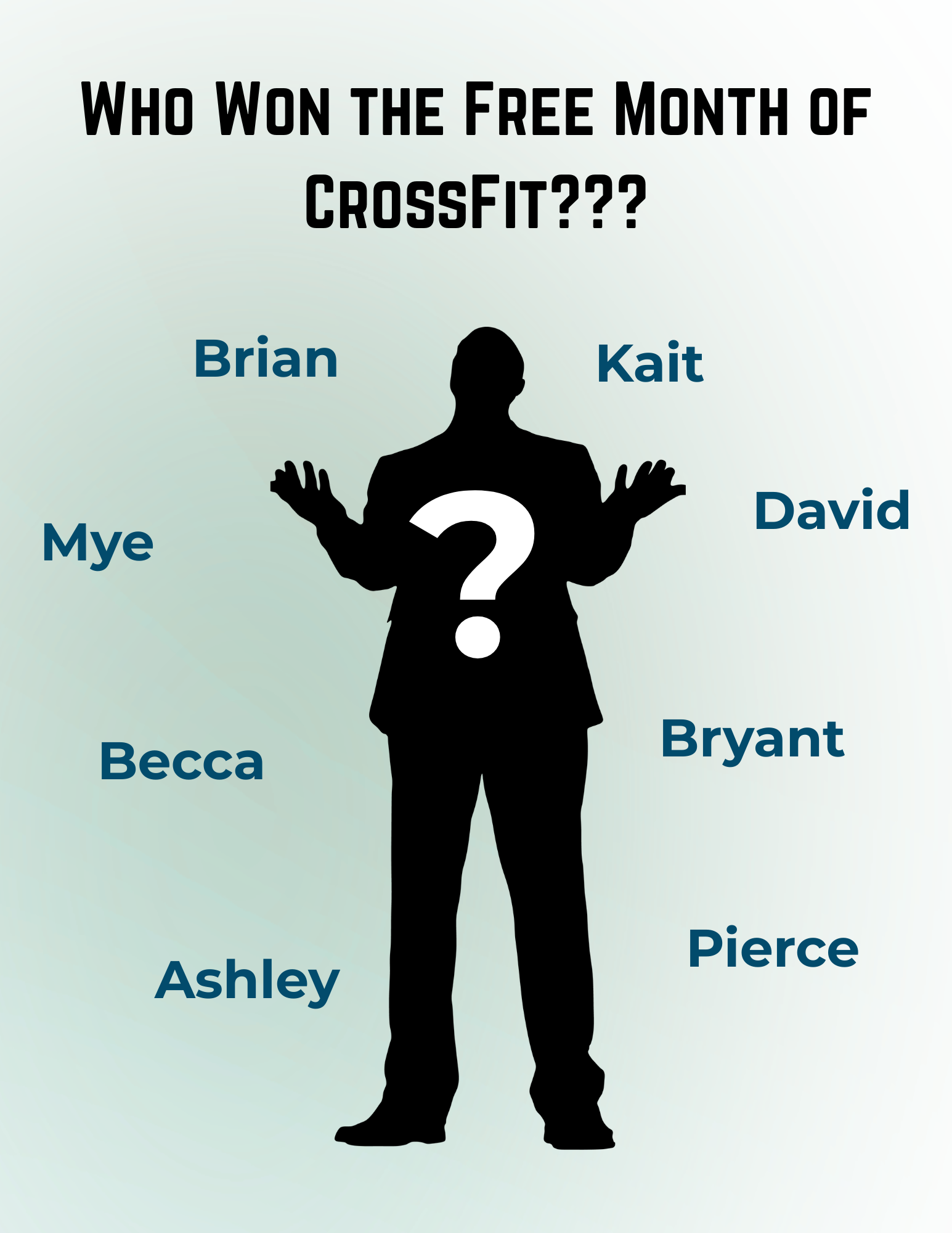
Well, I bet I'm more excited for this wheel to spin than any of you. I love this wheel, we use it every month! Nothing better than making someone's day. I enjoyed getting on the floor at your job and meeting you all. I also enjoyed the popcorn bar downstairs with some reese's pieces. That was SWEET! Ya'll have such a nice place there!

VIDEO WALKTHROUGH OF OCTOBER NEWSLETTER Unpacking each area a little deeper, but reading would still be recommended!

VIDEO WALKTHROUGH OF NEWSLETTER AND CONSISTENCY CREW ANNOUNCEMENT
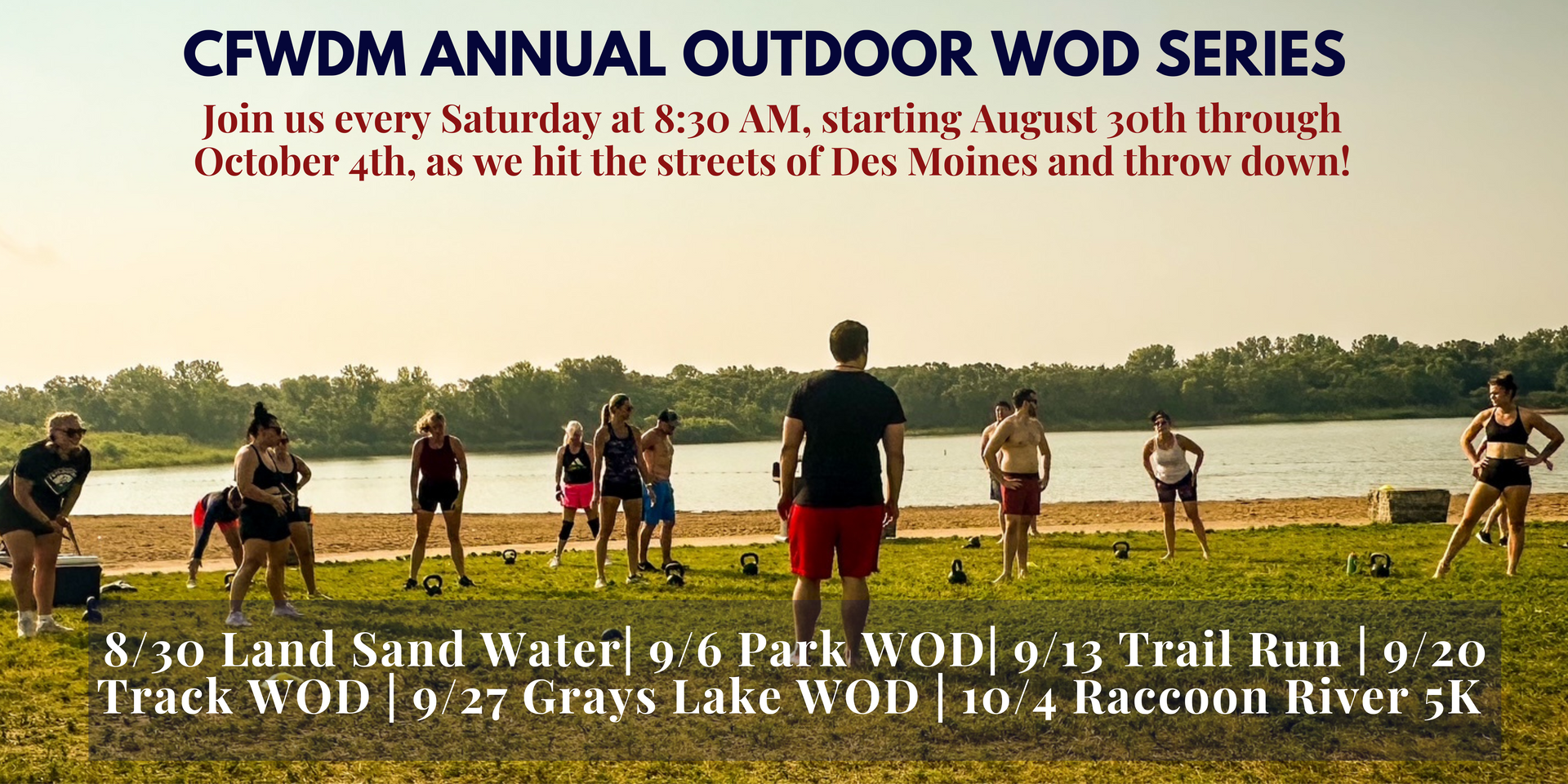
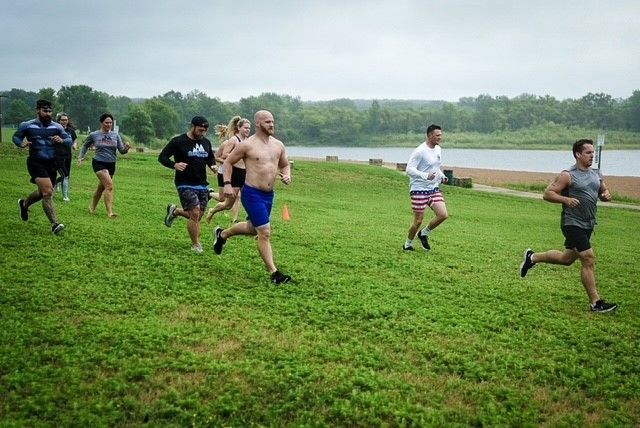
CFWDM Annual Outdoor WOD Series Join us every Saturday at 8:30 AM, starting August 30th through October 4th, as we hit the streets of Des Moines and throw down!
VIDEO WALKTHROUGH OF NEWSLETTER AND CONSISTENCY CREW ANNOUNCEMENT